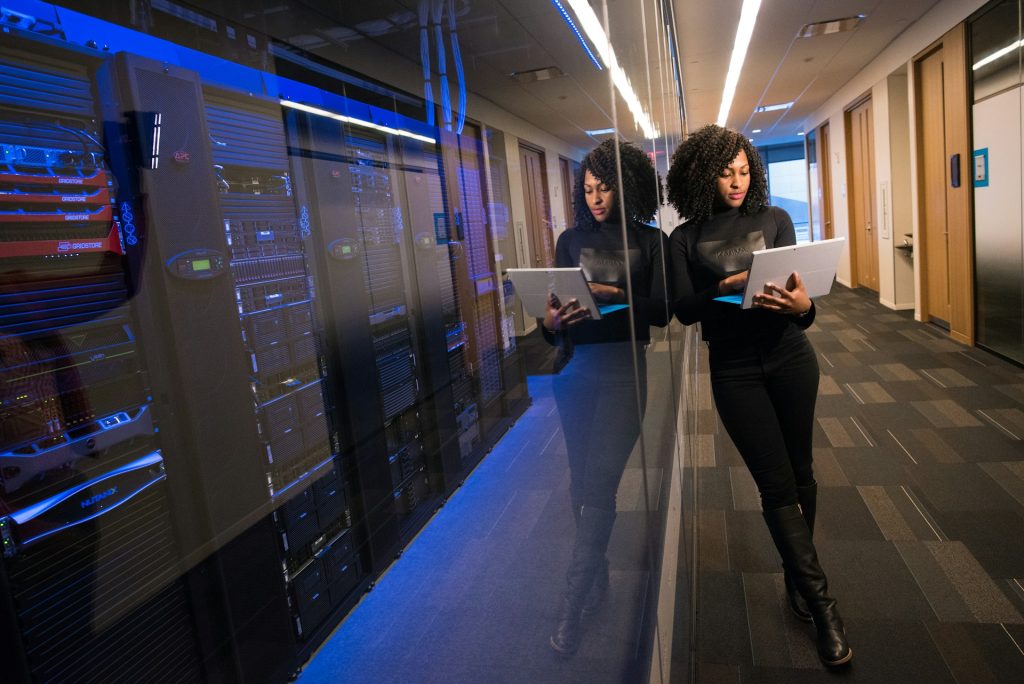
In a world where technology evolves at lightning speed, the phrase “futuristic hardware” is no longer a concept reserved for science fiction. It’s unfolding in real time—on desktops, in data centers, and even inside pockets. From quantum breakthroughs to AI-driven architecture, future computer hardware is already shaping how we compute, create, and connect. Welcome to a reality where innovation meets daily use.
Quantum Leaps: Computing at the Molecular Level
Quantum computing has moved from theoretical buzz to tangible momentum. Companies like IBM and Google have made headway in developing quantum processors capable of solving problems that would take classical computers thousands of years. These systems use qubits instead of traditional bits, allowing multiple states at once and exponential computing power.
While still in its infancy for mainstream use, the integration of quantum co-processors into classical computing frameworks signals the beginning of hybrid systems. These developments stand at the forefront of future computer hardware innovation, promising capabilities that can revolutionize fields like cryptography, drug discovery, and climate modeling.
AI on the Chip
Gone are the days when AI was just a software layer. The new frontier is hardware acceleration for AI at the chip level. NVIDIA’s GPUs have led the charge, but now, specialized AI chips—like Google’s Tensor Processing Units (TPUs) and Apple’s Neural Engines—are making AI faster, more efficient, and accessible in everyday devices.
Edge AI hardware enables real-time decision-making without cloud dependency. This means your smart home devices, phones, and even appliances can make instant intelligent choices, all thanks to the evolution of future computer hardware engineered for localized machine learning tasks.
Neuromorphic Engineering: Mimicking the Brain
The next major stride in hardware is inspired not by metal but by biology. Neuromorphic computing seeks to replicate the brain’s synaptic patterns using spiking neural networks. Chips designed on this architecture, such as Intel’s Loihi, operate using event-based signals, drastically reducing power consumption and improving pattern recognition capabilities.
This brain-like processing is ideal for robotics, autonomous vehicles, and any application needing adaptive behavior. It’s a critical pillar of future computer hardware, where efficiency, learning, and energy-conscious performance converge.
Memory Gets Smarter and Faster
Traditional memory hierarchies are being redefined. New technologies like 3D XPoint (used in Intel Optane) offer faster-than-NAND performance with greater durability. RAM is no longer the sole player in fast access storage; we now see non-volatile memory beginning to blur the lines between storage and memory.
Moreover, DDR5 RAM has entered the consumer market, doubling bandwidth and increasing efficiency over its predecessors. As software demands scale, the enhancements in memory technology remain a vital part of future computer hardware that keeps systems agile and responsive.
Modular and Sustainable Design
Modularity is making a comeback—but this time, with sustainability in mind. Tech companies are shifting toward component-based architecture to extend the lifecycle of hardware. Products like the Framework Laptop exemplify this trend, allowing users to upgrade individual parts instead of replacing entire devices.
This approach isn’t just user-friendly—it’s planet-friendly. Reduced electronic waste and easier repairability are transforming how we view product longevity and innovation. Sustainability and upgradability are no longer trade-offs; they’re core features of future computer hardware design.
Cooling Innovation and Thermal Mastery
As hardware gets faster, it also runs hotter. Air cooling is being challenged by liquid and even phase-change cooling methods once exclusive to overclocking enthusiasts. Now, manufacturers are integrating advanced cooling systems into consumer-ready products to maintain performance without thermal throttling.
In data centers, immersion cooling—where components are submerged in non-conductive liquids—is becoming a practical solution to improve energy efficiency. Managing heat effectively is no longer an afterthought; it’s fundamental to the advancement of future computer hardware.
Connectivity Enters Hyperdrive
The rollout of PCIe 5.0 and USB4 is pushing data transfer speeds to new thresholds. These high-bandwidth interfaces allow for faster communication between hardware components, reducing bottlenecks and improving system responsiveness. Wi-Fi 7 and 6G are on the horizon, promising ultra-low latency and robust bandwidth for all types of connected devices.
With such advancements, tasks like 8K streaming, cloud gaming, and high-speed backups are no longer burdensome. These enhancements ensure that future computer hardware is prepared for bandwidth-heavy applications across home and enterprise environments alike.
Final Thoughts: Tomorrow’s Tech, Today
What once felt like dreams on the horizon are now realities within arm’s reach. Quantum computing, AI integration, neuromorphic processing, and modular design aren’t just bold headlines—they’re building blocks of the digital age we live in. As future computer hardware evolves, it brings a promise: technology that is not only more powerful but also more intuitive, efficient, and sustainable.
In today’s rapidly transforming landscape, the future isn’t coming—it’s already arrived, plugged in, and powering up.
About the Author